
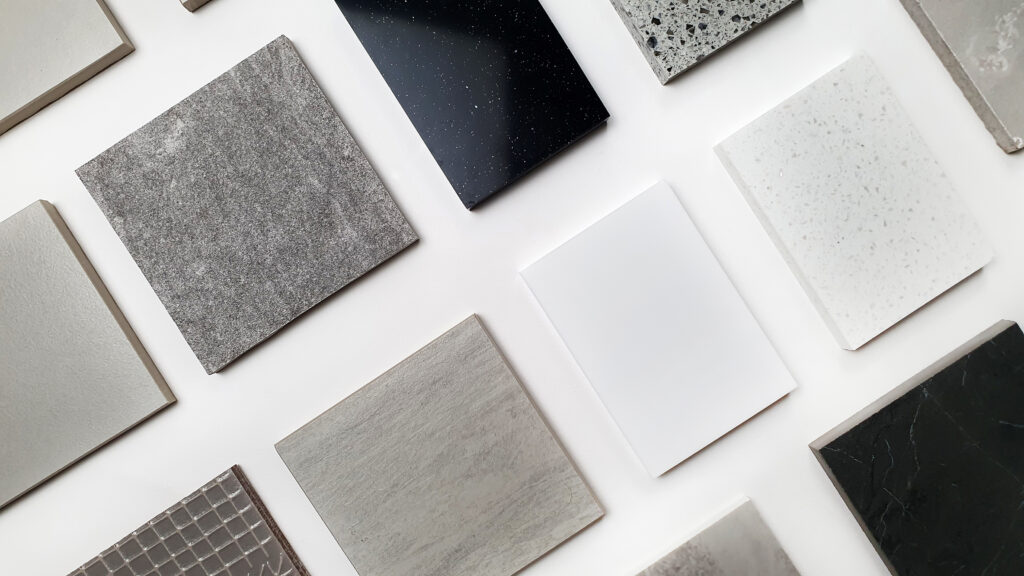
If you’re planning a kitchen or bathroom remodel, chances are you’ve come across three names again and again: granite, quartz, and quartzite. They sound similar, they’re often displayed side by side in showrooms, and honestly, the names alone don’t tell you much about how each one performs in your home.
At Favrstone, we help homeowners across Springfield, Ozark, and Southwest Missouri choose the right countertop material every day. Here’s a straightforward breakdown of what sets these three options apart, along with the pros and cons of each, so you can make the choice that fits your kitchen, your budget, and your lifestyle.
What Is Granite?
Granite is a natural stone quarried directly from the earth. It forms from cooled magma, which gives it a distinct, speckled appearance with a wide range of natural colors and patterns. Because every slab comes from the ground, no two granite countertops look exactly alike.
Pros of Granite
- Natural, one-of-a-kind patterns in every slab
- Heat resistant, so it holds up well near stovetops
- Adds resale value to your home
- Generally the most budget-friendly of the three natural stone options
Cons of Granite
- Porous, so it needs to be sealed periodically to resist stains
- Pattern and color can vary slab to slab, which makes matching multiple pieces trickier
- Can chip if struck hard enough with a heavy object
What Is Quartz?
Quartz countertops are engineered, not quarried. They’re made by combining ground natural quartz with resins and pigments, then compressing the mixture into slabs. This manufacturing process is what gives quartz its most defining feature: consistency.
Pros of Quartz
- Non-porous, so it resists stains and bacteria without sealing
- Extremely low maintenance. A simple wipe-down keeps it clean
- Consistent color and pattern, so what you see in the showroom is what gets installed
- Wide range of colors and styles, including looks that mimic natural stone
Cons of Quartz
- Not as heat resistant as granite or quartzite. Trivets and hot pads are recommended
- Because it’s engineered, it lacks the natural variation some homeowners want
- Direct sunlight over time can cause slight fading in some colors
What Is Quartzite?
Quartzite is a natural stone, but it’s often confused with quartz simply because the names look alike. Quartzite starts as sandstone, then transforms deep underground under intense heat and pressure. The result is one of the hardest natural stones used in countertops today, with the soft, marble-like veining that many homeowners love.
Pros of Quartzite
- Exceptional hardness, standing up to scratches and daily wear better than granite or marble
- Heat resistant, making it a practical option for busy kitchens
- Natural veining and movement in every slab, similar in appearance to marble
- Long-lasting and durable enough for high-traffic homes
Cons of Quartzite
- Porous, like granite, so it needs periodic sealing to resist stains
- Typically a higher price point due to its hardness and the more complex fabrication process
- Slab availability can be more limited depending on color and pattern
Granite vs. Quartz vs. Quartzite: Quick Comparison
| Feature | Granite | Quartz | Quartzite |
| Origin | Natural stone | Engineered stone | Natural stone |
| Maintenance | Periodic sealing | No sealing needed | Periodic sealing |
| Heat Resistance | High | Moderate | High |
| Pattern Consistency | Varies by slab | Very consistent | Varies by slab |
| Best For | Budget-friendly natural stone look | Low-maintenance, consistent design | Durability with a marble-like appearance |
So, Which One Should You Choose?
There isn’t a single right answer here. It depends on what matters most to you.
If you want the classic look of natural stone at a more accessible price point, granite is a solid, time-tested choice. If low maintenance and design consistency are your top priorities, quartz is likely your best fit. And if you love the elegance of marble but need something tough enough for a busy household, quartzite offers the best of both worlds.
The good news is you don’t have to figure this out alone. Favrstone brings over 30 years of combined experience helping homeowners in Springfield, Ozark, and Southwest Missouri choose the right countertop material for their space, their budget, and the way they actually use their kitchen or bathroom.
Frequently Asked Questions
Is quartzite the same as quartz? No. Quartzite is a natural stone quarried from the earth, while quartz is engineered from ground quartz mixed with resins. Quartzite has natural veining and variation, while quartz offers a more uniform, low-maintenance surface.
Which material is the most durable? Quartzite is generally considered the hardest of the three, followed closely by granite and quartz. All three hold up well to daily kitchen and bathroom use when properly cared for.
Do granite and quartzite really need to be sealed? Yes. Both are natural, porous stones, so periodic sealing helps them resist stains over time. Quartz does not require sealing since it’s non-porous.
Which option is the most budget-friendly? Granite is typically the most accessible price point of the three, though the final cost depends on the specific color, slab availability, and edge profile you choose.
Can I mix materials in the same home? Absolutely. Many homeowners choose one material for kitchen countertops and another for bathroom vanities based on the look and maintenance level they want in each space.
How do I know which material is right for my home? The best way is to see and feel the slabs in person. Our team can walk you through the pros and cons based on your kitchen or bathroom’s daily use, your design style, and your budget.
Ready to See Your Options in Person?
Photos and descriptions only tell you so much. The best way to choose between granite, quartz, and quartzite is to see the slabs in person and feel the difference for yourself.
Visit our showroom at 5311 N. 23rd St. in Ozark, MO, or contact Favrstone today to schedule your free estimate.