
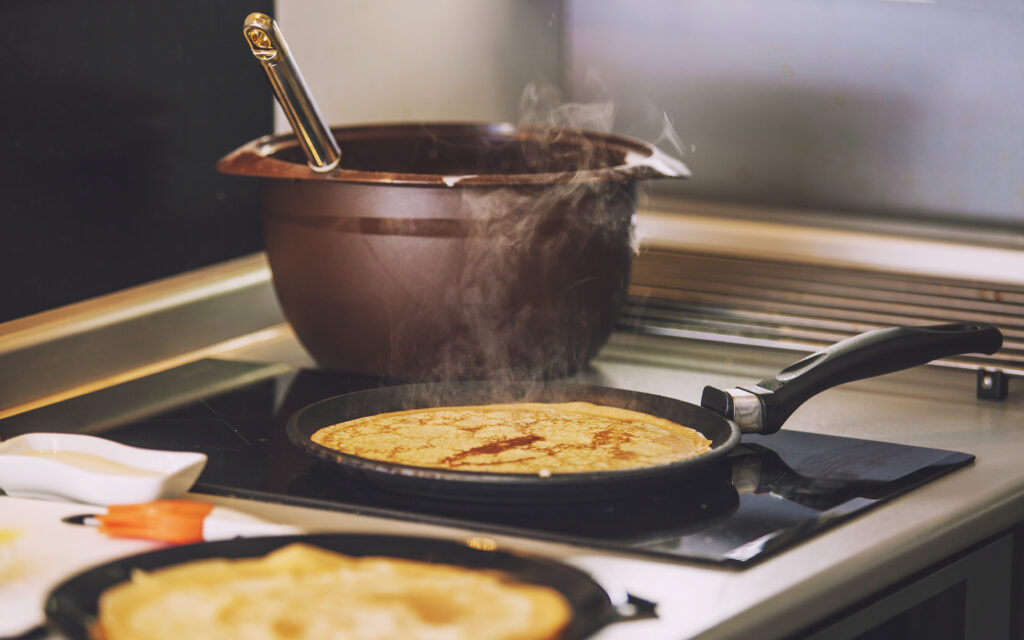
Granite countertops are a popular choice for kitchen remodeling projects, prized for their durability, beauty, and natural stone appeal. However, many homeowners wonder whether they can safely place hot pans directly on their granite surfaces without causing damage. This comprehensive guide will explore granite’s heat resistance properties, potential risks, and best practices for maintaining your granite countertops when working with hot cookware.
The short answer is that while granite can withstand some heat, placing extremely hot pans directly on granite countertops is not recommended. Understanding why requires a closer look at granite’s thermal properties and the science behind thermal shock.
UNDERSTANDING GRANITE’S HEAT RESISTANCE PROPERTIES
Granite is an igneous rock formed under extreme heat and pressure deep within the Earth’s crust. This natural formation process gives granite impressive heat tolerance compared to other countertop materials. The melting point of granite typically ranges between 2,300 to 2,500 degrees Fahrenheit, which is far higher than any temperature your kitchen cookware will reach.
Most hot pans from your stovetop or oven range between 300 and 500 degrees Fahrenheit. At first glance, this seems well within granite’s tolerance range. However, the issue isn’t about melting the granite but rather about thermal shock and localized stress on the stone surface.
Granite countertop heat resistance varies depending on the specific mineral composition and thickness of your particular slab. Darker granites often contain more quartz and feldspar, which can affect their thermal expansion properties. The finish and sealing treatments applied to your granite can also influence how it responds to sudden temperature changes.
THERMAL SHOCK AND GRANITE COUNTERTOPS
Thermal shock occurs when different parts of the granite expand at different rates due to sudden temperature changes. When you place a hot pan directly on a cool granite surface, the area under the pan heats up rapidly while the surrounding granite remains cool. This temperature differential causes uneven expansion, which can lead to stress fractures or cracks in the stone.
The risk of thermal shock increases with several factors. Thinner granite slabs are more susceptible to cracking than thicker ones. Previously damaged areas or existing micro-fractures can become weak points where thermal stress concentrates. Additionally, granite that has been weakened by improper installation or heavy impact may be more vulnerable to heat damage.
Even if thermal shock doesn’t cause immediate visible damage, repeated exposure to extreme temperature changes can weaken the granite over time. Small stress fractures may develop gradually, eventually becoming noticeable cracks that require professional repair.
GRANITE VERSUS OTHER COUNTERTOP MATERIALS
When comparing granite vs quartz heat tolerance, granite generally performs better with heat exposure. Quartz countertops are engineered stone products that contain resins and polymers, which can discolor or damage at temperatures around 300 degrees Fahrenheit. Granite’s natural composition makes it more heat-resistant than most engineered materials.
Marble countertops, while also natural stone, are typically less heat-resistant than granite due to their different mineral composition. Laminate countertops have very poor heat resistance and can be damaged by moderately warm objects, making granite a superior choice for busy kitchens.
However, even with granite’s superior heat tolerance compared to other materials, protection is still recommended. The goal is to preserve both the structural integrity and aesthetic appearance of your investment for years to come.
BEST PRACTICES FOR PROTECTING GRANITE FROM HEAT
The most effective way to protect your granite countertops is to use trivets, hot pads, or heat-resistant mats when placing hot cookware on the surface. These protective barriers distribute heat more evenly and prevent direct contact between hot objects and the granite.
Silicone trivets are excellent choices because they can withstand high temperatures while providing a stable base for your cookware. Cork trivets offer natural insulation properties and complement granite’s organic appearance. Metal trivets with rubber feet provide durability while protecting the granite surface from scratches.
When cooking, develop habits that minimize heat exposure to your countertops. Allow pans to cool for a few minutes before setting them down, or place them directly on the stovetop’s unused burners instead of the counter. Keep a designated landing area near your cooking space with appropriate protective materials readily available.
CARE FOR GRANITE KITCHEN COUNTERTOPS
Proper granite countertop maintenance extends beyond heat protection. Regular sealing helps preserve the stone’s resistance to stains and moisture, which can affect its structural integrity over time. Most granite countertops should be resealed annually, though this varies based on usage and the specific granite type.
Clean spills immediately to prevent staining, and use pH-neutral cleaners specifically designed for natural stone. Avoid acidic cleaners like vinegar or lemon-based products, which can etch the granite surface and potentially weaken it.
Inspect your granite regularly for signs of damage, including small cracks, chips, or areas where the sealant appears worn. Addressing minor issues promptly can prevent them from becoming major problems that require expensive repairs.
LONG-TERM EFFECTS AND REPAIR CONSIDERATIONS
Repeated exposure to extreme heat without proper protection can cause cumulative damage to granite countertops. While granite is durable, the thermal cycling from hot to cool can eventually lead to micro-fractures that may not be immediately visible but can worsen over time.
If your granite does develop cracks or damage from heat exposure, professional repair is often possible. Small cracks can sometimes be filled with color-matched epoxy, while larger damage may require partial replacement of the affected area. However, prevention is always more cost-effective than repair.
Professional restoration services can also help refresh granite that has developed minor heat-related discoloration or surface changes. Regular maintenance by stone care professionals can extend the life of your granite countertops significantly.
FREQUENTLY ASKED QUESTIONS
What Temperature Can Granite Countertops Withstand?
Granite can technically withstand temperatures up to 2,300-2,500 degrees Fahrenheit before melting. However, thermal shock can occur at much lower temperatures when hot objects are placed directly on cool granite surfaces.
Can I Put a Hot Pizza Stone on Granite?
It’s not recommended to place a hot pizza stone directly on granite. Pizza stones can reach temperatures of 500-600 degrees Fahrenheit, which could cause thermal shock. Always use a trivet or cooling rack.
Will Hot Pans Crack My Granite Countertops?
While occasional brief contact with moderately hot pans may not cause immediate damage, repeated exposure or extremely hot cookware can lead to thermal shock and cracking. Using protective barriers is the safest approach.
How Do I Know if My Granite Is Heat Damaged?
Signs of heat damage include visible cracks, discoloration around areas where hot items were placed, or changes in the granite’s surface texture. If you notice any of these signs, consult a stone care professional.
Are There Different Heat Tolerances for Different Granite Colors?
Yes, different granite compositions can have varying heat tolerances. Darker granites often contain different mineral ratios than lighter ones, which can affect their thermal properties. However, protective practices should be used regardless of granite color.
In Summary:
While granite countertops offer excellent heat resistance compared to many other materials, protecting them from direct contact with hot cookware is essential for maintaining their beauty and structural integrity. The use of trivets on granite surfaces is a simple yet effective way to prevent thermal shock and extend the life of your investment.
By understanding granite’s properties and implementing proper care practices, you can enjoy your granite countertops for decades while maintaining their stunning appearance. Remember that prevention is always easier and more cost-effective than repair, making protective habits an essential part of granite countertop ownership.