
Republic and Nixa are in a building cycle. New apartment communities have been going up in both cities over the past several years, and the pipeline isn’t slowing down. Families relocating to the area, young professionals who want something newer without the Springfield price, people who moved here and aren’t ready to buy yet. The rental demand is real, and developers are responding to it.
For the developers and property managers behind these projects, countertop selection is one of those decisions that seems small at the planning stage and shows up constantly over the life of the property. The wrong material gets replaced. The right one goes through tenant cycle after tenant cycle and stays on the list of things nobody has to worry about.
Why Apartment Countertops Are Different
Owner-occupied homes are one thing. Rental units are another. The surface in a rental gets cleaned by a management company between tenants, often aggressively. It gets used by people who treat it carefully and people who don’t. It needs to look presentable for showings after years of occupancy. And it can’t require the kind of maintenance attention that most tenants aren’t going to give it.
Laminate holds up fine for a few years under normal residential use. In a rental, the cleaning chemistry tends to be stronger and the range of tenant habits is wider. Laminate can last 10 to 20 years in the right conditions, but rental conditions aren’t always the right conditions. Edges chip, moisture gets underneath, and there’s no repairing it once the surface is compromised. That means a replacement conversation and a capital expense that could have been avoided.
Stone countertops don’t have that problem. Granite is hard enough that normal use doesn’t show. Quartz doesn’t require sealing and doesn’t absorb stains. Both materials can be cleaned hard between tenants without suffering for it.
Granite vs. Quartz for Multifamily
Both are solid choices for apartment communities, and the decision usually comes down to maintenance philosophy and aesthetic goals.
Granite is harder and handles heat better, which matters in kitchen applications. The natural variation in granite slabs gives each unit a slightly different look. Some developers like that character; others find it harder to manage when they want consistency across a property. Granite does need periodic resealing, which is inexpensive and simple but requires that someone actually does it.
Quartz requires no sealing, ever. The surface is non-porous, so it doesn’t absorb liquids or odors regardless of what tenants do or don’t do for maintenance. It’s also consistent across slabs, which makes it easier to achieve a uniform look across dozens of units. For property managers who want countertops that require zero intervention between tenants beyond a wipe-down, quartz is the easier choice.
We work with developers on both sides of this decision. Tell us how you’re running the property and we’ll help you figure out which one fits.
What’s Happening on the Ground in Republic and Nixa
Republic
The growth along Highway 60 has been consistent for years now, and multifamily has followed the rooftops. New apartment communities here are competing for tenants who moved to Republic specifically. They want to be in Republic, in that school district, near the jobs and services that have built up along that corridor. That’s a tenant who has made a considered choice about where they live. They notice the difference between a unit that looks finished and one that feels like it cut corners.
Nixa
Nixa has absorbed a lot of families relocating to Southwest Missouri who are drawn to the schools and the community feel. The apartment inventory serves people who are transitioning: new to the area, not ready to buy, still figuring out where they want to land. These are often dual-income households with standards. A Nixa apartment community with granite countertops and quality finishes can compete against ownership-alternative messaging in a way that basic builder-grade materials can’t.
Making Consistency Work Across a Large Property
Outfitting 40 or 80 or 120 units isn’t just about finding a material that looks good. It’s about getting consistent results across a lot of square footage, coordinating installation with a construction schedule, and making sure what gets delivered to unit 85 looks the same as what went into unit 12.
Favrstone’s fabrication facility handles volume. We’ve supplied countertops for large multifamily projects and we know how to sequence production and installation across phases so the project doesn’t stall waiting on us. If you’re working with a GC who’s phasing the building completion, we can work around that schedule.
What Property Managers Actually Need
Surfaces That Survive Turnover
Move-out cleaning is hard on surfaces. Bleach, scrubbing, whatever the last tenant left behind. Granite and quartz handle it. The surface that went in at construction should look like a selling point when a prospective tenant walks in three or four years later, not an apology.
No Sealing Obligations for Tenants
Nobody tells a tenant to reseal the countertop. With quartz, that’s not a problem because it doesn’t need it. With granite, the management company handles it on a simple schedule. Either way, the surface isn’t dependent on tenant behavior to stay in good shape.
Leasing Photography
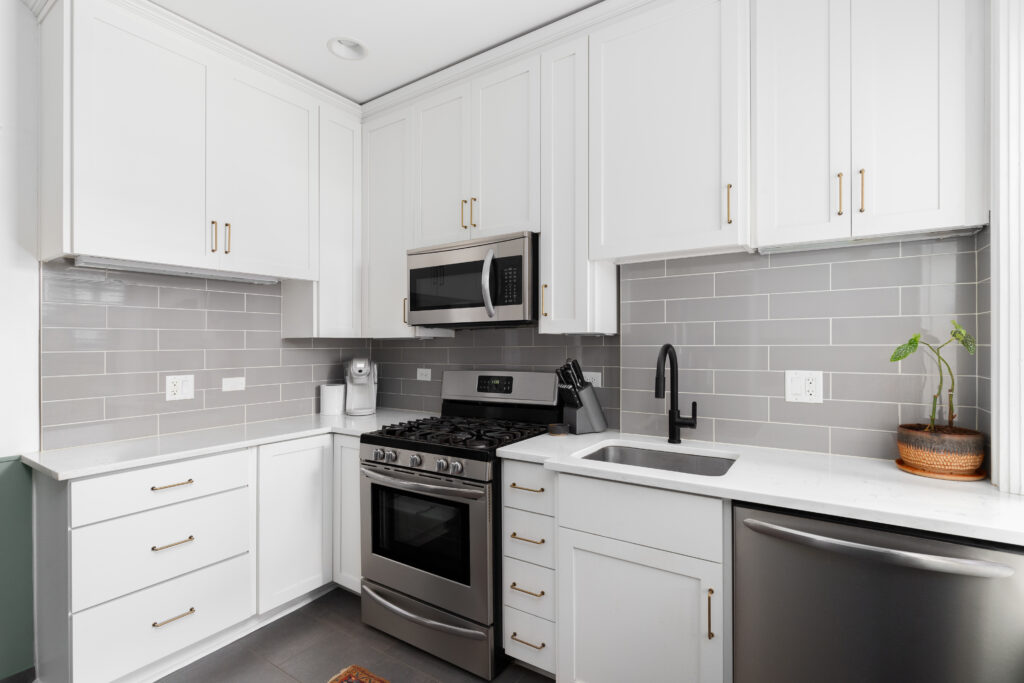
Apartment listings live online. The kitchen photo often determines whether someone books a tour. Stone countertops photograph well in a way that laminate simply doesn’t. There’s a quality signal in the image that prospective tenants pick up on even before they read a word of the listing.
Frequently Asked Questions
Can Favrstone handle countertop orders for large multifamily developments?
Yes. We’re set up for volume. We can keep material consistent across large orders and phase installation to align with your construction schedule.
Which is the better choice for apartments: granite or quartz?
Both perform well in rental environments. Quartz is zero-maintenance and consistent in appearance, which makes it popular with property managers. Granite has a natural character and excellent durability, and some developers prefer it for the look. We’ll help you think through which one fits how you’re running the property.
How do you handle phased delivery for buildings completed in stages?
We coordinate around your schedule. The earlier you bring us into the conversation, the more flexibility we have to plan fabrication and installation in phases without delays.
How long should granite or quartz last in a rental property?
Decades, with reasonable use and basic maintenance. Laminate countertops typically last 10 to 20 years under normal conditions, but rental environments put more stress on surfaces than that data assumes. Stone holds up through the kind of cleaning and turnover cycles rentals actually see, without the gradual deterioration that shows up in laminate over time.
Do you work with developers and GCs, or just with end users?
We work with developers, general contractors, and property management companies directly. Whoever is managing the project on your end, we can work with them.
Built to Hold Up Through Every Lease
The apartment communities going up in Republic and Nixa are going to be part of those cities for a long time. The finishes that go in during construction are the ones the property will live with through tenant cycles, market shifts, and whatever comes next. Granite and quartz countertops are a decision that pays for itself by not becoming a problem.
Favrstone fabricates and installs custom stone countertops for multifamily projects throughout Southwest Missouri. If you’ve got a development coming up in Republic, Nixa, or anywhere in the region, let’s talk early. Before the schedule gets tight.